Thứ Bảy, 12 tháng 2, 2005

Gadling on the Travails of Travel Writing


Gadling on Travails

I doubt this bloggy question is going anywhere serious, but I've challenged Jen Leo at Written Road about the issue of travel writers giving away their work for free. Yep, another nail in the coffin. Erik picks up the thread at Gadling.

Travel Writers Lament
Feb 12, 2005
Erik Olsen


Jen Leo, who runs the fun and always interesting Writtenroad blog, posted a thoughtful post on travel writing. She blogs about the pay (um, low), the difficulty of making it (though she seems to be doing fine, with a new book out shortly) and some thoughts on strategy. The post is in response to several posts on the travails of travel writing by Carl Parkes (aka Friskodude) who we’ve linked to several times. Anyway, give it a read. Perhaps you’ve no desire to write about travel, you might still find the discussion of interest.

Gadling on Travel Writing

Travel Books Too Depressing?


Travel Writer at Work

Ever since Paul Theroux penned his enormously successful book about his train travels in Asia (two decades ago!), travel writing has turned away from sunny dialogues to stories of trials and tribulations. You know, some travel writer signs up to go fishing in the Arctic Ocean in the dead of winter, and almost dies, but produces a book about his foolish adventure.

Also see: Tim Cahill.

The following article is somewhat of a new approach, in that it openly dislikes these tales of woe and wishes for a return to happier times. Sort of like Lowell Thomas -- all the adventure without the pain.

I've won two Lowell Thomas Awards from the Society of American Travel Writers, and his lovely mug, on the award plaque, is posted on my wall just below the clock. Nice mustache, Lowell!

Thanks, Jen. Great find. How's life in San Mateo? Ready for Vegas?

Jen Leo at Written Road

The good, bad and the self-indulgent
TRAVEL BOOKS: Around the world from an armchair
Tom Spears
CanWest News Service
February 06, 2005


The Cat in the Hat would make a successful travel writer today because he has the right attitude. He says: "Look at me, look at me, look at me now!"

Repeat: I am radical! I am extreme! I am snooty!

Yup, must be a travel writer. The good news: If you plow through the travel section at the book store, you can find some good books among the show-offs. But first you have to work past items like this:

- Hell or High Water, by Peter Heller. It's about some guys kayaking a fearsome river in the Himalayas.

He writes like this: "There was no guarantee any of them would get back alive . . . If anyone could get it done, though, it would be these seven."

That's the narration. The dialogue runs like this: "Nobody has ever died on my watch." A kayaker talks about how he can't get hurt any worse and the doctor will shoot in "stuff," and it's just a matter of how much he can endure.

I felt that way, too.

- The Bird Man and the Lap Dancer, by Eric Hansen. His adventures include birdwatching with strippers (which is a little creepy, despite his hands-off approach) and recovering body parts, including half a head, after a plane crash.

OK, but what if you want to go somewhere and read about what it's like first? Or even read about a place where you don't plan to travel? What if you just want a travel book about travelling? Travelling by non-extreme people like yourself?

You're in luck. You do not, as one writer recently claimed, have to settle for crass pitches for tawdry resorts. There are some fine travel books. Among them:

- New York, the Unknown City, by Brad Dunn and Daniel Hood (Arsenal Pulp Press, $22.95). The series is Canadian, with previous books on Toronto and Montreal. Which may explain the toned-down approach: It lists hundreds of neat facts but doesn't scream about New York being the biggest and best.

Instead you'll learn where mobster Lucky Luciano hung out; why the bedrock allows skyscrapers only in some locations; where Woody Guthrie met Pete Seeger; how organized criminals shoplift from high-priced retailers; and where Edwin Booth, brother of John Wilkes Booth, performed. He was an actor, too.

- Time's Magpie , by Myla Goldberg (Crown Journeys, $23). This short book is a loving look at Prague, the title referring to the city's ability to hang on to buildings from its past and store their rich history-- a heritage that got bombed out of many European cities.

Read the Rest

New Guinea Images at Flickr


Gadling Photo of the Day


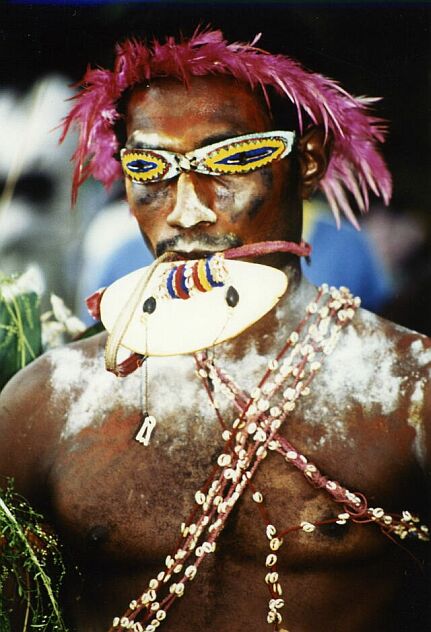
New Guinea Man Dressed for Sing Sing


New Guinea by Carl Parkes


New Guinea Kids by Carl

A few years ago, I managed to make my way over to Papua New Guinea and spent three weeks exploring the country, from the dangerously anarchic capital to the interior highlands and up the Sepik River into the virtual heart of darkness. And last year, I joined Flickr with their FREE 100-image account and started over a dozen groups centered around photography in Asia. One of those groups was New Guinea Images.

Nobody joined. Well, it's got three members.

My Japan Images and Thailand Images have proven very popular with almost 100 members each, and loads of great images added daily. Best of all, India Images is absolutely superb and the quality of photographs is nothing short of astounding. I go over all my groups daily and delete the turkeys, but I rarely need to do anything with India Images (thank god).

But New Guinea just limps along. However, Erik at Gadling just gave a mention, so perhaps a few folks will join Flickr and post new stuff at New Guinea Images.

Really, I'm begging. Help me out with this group.

New Guinea is one of those few great last places where it sometimes seems time has stood still. Our old favorite Friskodude (aka Carl Parkes) has posted some of his stellar pics on Flickr, and we’re calling out this one as our POTD today.

Erik at Gadling

New Guinea Images at Flickr

Travel Writers Wanted


Travel Writers Wanted

Are you an established travel writer about to embark on an interesting, intriguing adventure in the next few months? Are you also an engaging and entertaining blogger? Looking for candidates to blog on commission for MSN/MSNBC for about a month, starting in the spring, on adventurous travel. Please, established bloggers only need send me their pitch to james.eng@msnbc.com

Thứ Sáu, 11 tháng 2, 2005

Think Your Guidebook Sales are Lousy?


Young Burmese Monks by Carl Parkes

Just thank your lucky stars you didn't waste a large portion of your life writing about the Enron collapse or some other corporate scandal that has passed like dust in the wind. Who was that guy, Ken Lay? And why is he still a free man when Martha is doing time in the Big House?

Boom or Bust
Slate....
via MediaBistro
via GalleryCat
via my RSS Reader
Feb 11, 2005


Simon & Schuster is printing 200,000 copies of DisneyWar, but recent boardroom dramas have had much less exciting numbers. Slate 's Daniel Gross reports:

...The excellent Smartest Guys in the Room: The Amazing Rise and Scandalous Fall of Enron, written by three Fortune writers who collectively received $1.4 million for their troubles, has probably sold around 70,000 copies. Power Failure, penned by Mimi Swartz and whistleblower Sherron Watkins, sold fewer than 30,000 copies. According to Nielsen BookScan, which counts about 70 percent of U.S. sales, 24 Days: How Two Wall Street Journal Reporters Uncovered the Lies that Destroyed Faith in Corporate America has sold 16,765 copies.

But the Enron books were blockbusters compared with those about the botched AOL-Time Warner deal. According to Bookscan, Fools Rush In: Steve Case, Jerry Levin, and the Unmaking of AOL Time Warner by Nina Munk, sold 5,000; There Must Be a Pony in Here Somewhere: The AOL Time Warner Debacle and the Quest for a Digital Future by all-star Wall Street Journal reporter Kara Swisher, sold 3,744; and Stealing Time: Steve Case, Jerry Levin, and the Collapse of AOL Time Warner by Alec Klein of the Washington Post, sold 9,176.

Read the Rest

Chủ Nhật, 6 tháng 2, 2005

Publishing Fraud at Vanity Press


Godzilla Celebrates His First Novel


This is just too funny. Last year, a group of 30 sci-fi writers in San Francisco decided to test the waters with a "traditional" publisher (that is, not a "vanity" press) and sent in the worst possible manuscript they could invent. And guess what? The sci-fi novel was happily accepted, until the scam was discovered and then the offer was rescinded. The San Francisco jokers have issued the following press release:


Science Fiction Authors Hoax Vanity Publisher

"Atlanta Nights," by Travis Tea, was offered a publishing contract by PublishAmerica of Frederick, Maryland.

Washington, DC (PRWEB)

January 28, 2005


Over a holiday weekend last year, some thirty-odd science fiction writers banged out a chapter or two apiece of "Atlanta Nights," a novel about hot times in Atlanta high society. Their objective: to write a deeply awful novel to submit to PublishAmerica, a self-described "traditional publisher" located in Frederick, Maryland.


The project began after PublishAmerica posted an attack on science fiction authors at one of its websites (http://www.authorsmarket.net/). PublishAmerica claimed "As a rule of thumb, the quality bar for sci-fi and fantasy is a lot lower than for all other fiction.... [Science fiction authors] have no clue about what it is to write real-life stories, and how to find them a home." It described them as "writers who erroneously believe that SciFi, because it is set in a distant future, does not require believable storylines, or that Fantasy, because it is set in conditions that have never existed, does not need believable every-day characters."


The writers wanted to see where PublishAmerica puts its own quality bar; if the publisher really is selective, as the company claims, or if it is a vanity press that will accept almost anything, as publishing professionals assert.


"Atlanta Nights" was completed, any sign of literary competence was blue-penciled, and the resulting manuscript was submitted.


PublishAmerica accepted it.


From: PublishAmerica Aquisitions

Sent: Tuesday, December 07, 2004

Subject: Atlanta Nights


As this is an important piece of email regarding your book, please read it completely from start to finish. I am happy to inform you that PublishAmerica has decided to give "Atlanta Nights" the chance it deserves....Welcome to PublishAmerica, and congratulations on what promises to be an exciting time ahead.


Sincerely,

Meg Phillips

Acquisitions Editor

PublishAmerica


The hoax was publicly revealed on January 23, 2005. PublishAmerica withdrew their offer shortly afterward:


From: "PublishAmerica Acquisitions"

Sent: Monday, January 24, 2005

Subject: Your Submission to PublishAmerica


We must withdraw our offer to publish "Atlanta Nights". Upon further review it appears that your work is not ready to be published. There are portions of nonsensical text in the manuscript that were caught by our editing staff as they previewed the text for editing time assessment pending your acceptance of our offer.


On the positive side, maybe you want to consider contracting the book with a vanity publisher such as iUniverse or Author House. They will certainly publish your book at a fee.


Thank you.

PublishAmerica Acquisitions Department


Those who wish to see the novel, "Atlanta Nights" by Travis Tea, for themselves can find it at http://www.lulu.com/travis-tea


Publication at Lulu.com is free.


For more information about PublishAmerica and vanity presses, see:

http://www.sfwa.org/beware/

http://www.washingtonpost.com/wp-dyn/articles/A25187-2005Jan20.html


Sci-Fi Writers in San Francisco Test the Waters


Atlanta Nights Official Web Page -- Read the Hilarious Reviews......You Might Just Order This Book!


Thứ Bảy, 5 tháng 2, 2005

Advice from a Travel Writer


Travel Writer at Work


I'm often asked about being a guidebook writer

By Joshua Berman


How'd you get that job?


I've always written, edited all my school papers and, after college (Environmental Studies, Brown University), I published my first couple of magazine articles and was hooked. Then, I joined the Peace Corps and was assigned to a beautiful tropical country that was just beginning to crawl out from under a particularly intense period of gritty, vibrant history. Nicaragua still conjured up violent images of the civil war of the 1980s in most of the world's mind, but the strife had been over for years and things were, as they say, muy tranquilo. Word was getting out in backpacker circles and beyond, and we began to notice a trickling of curious gringos poking around along the border with Costa Rica; my fellow volunteers and I more or less witnessed the birth of tourism in Nicaragua with nary a guidebook in sight.


After completing our two-and-a-half-year tours of service, my companero, Randy Wood, and I decided to write the first, longest, and bestest-ever guide to Nicaragua. We pitched it to Moon (after finding their book proposal guidelines online) and they bought it. A year later we were holed up in the Pimp Tower, cranking away toward our first big deadline.


What is Moon Handbooks? Why did you choose to work for them?


Moon Handbooks is one of eight guidebook series produced by Avalon Travel Publishing (ATP). Randy and I approached Moon because the depth and quality of their books matched our vision of what we wanted to do in Nicaragua: use our combined six years experience living among Nicaraguans to create a thorough, in-depth guidebook with emphasis on the cultural and geographical characteristics that make this country totally unique in the region. The book was an important personal project for each of us, one that sometimes seemed an extension of our Peace Corps service. It was both an excuse to remain in Nicaragua and an opportunity to pay tribute to a country that had generously taken us in.


We wanted a publisher that would allow us to write in our own style in order to properly portray our passion for the place, even as we followed the necessary guidelines of the series. Moon encourages its authors to do just that. After signing with them, we learned that ATP is considered to be one of the better guidebook producers to work for, granting its authors copyright to their text and royalty-based contracts.


How long does it take to write or update a guidebook?


Writing the first edition of Nicaragua took two of us six months working every day, every night, and every weekend, traveling to every corner of the country. When I updated and rewrote Belize in 2003, I spent four straight months scouring the countrys resorts, restaurants, ridges, and reefs, writing it up as I went along, without a single day off. Randy and I once made a pact never to calculate our hourly pay.


How often do you update your books?


Each one gets updated every three years. Latin America and Caribbean titles are always released in the fall, when folks are planning their winter vacations. That means a book being released in November is based on research done during the previous December and February.


Do you pay any attention to your reader mail?


I read every single piece of correspondence I receive. People e-mail me either directly (josue AT stonegrooves DOT net) or through my publisher (atpfeedback@avalonpub.com). In fact, the very first thing I do when updating a new edition is go through the accumulated mail and press releases, filing them into folders based on the chapters of the book. Moon readers are generally a thoughtful, observant, and articulate crowd, and I always appreciate reading their observations and experiences.


How can I get my business listed in one of your books?


There are no fees to be listed in any Moon Handbook and no advertising (except for a single page in the back of the book). Inclusion is based on merit and accessibility, both of which are determined by the authors. Build the quality of your service, earn a good reputation, and I (or one of my co-authors) will eventually seek you out (Belize and Nicaragua are not large countries). If you're worried about getting mistakenly passed over (it happens), contact me at one of the e-mail addresses above and tell me where you are, what you offer, and why travelers should be told about your establishment.


What's a typical day for you? How do you spend your time?


During a pre-deadline research run, I am charging around the country (usually alone), sometimes walking the streets and lurking around bus stations, and often holed up in some hotel (from every fleabag hospedaje to $200-a-night suites), slamming local coffee and lost in my laptop. There usually isn't much (if any) time for boat tours, diving, or long hikes (I only dove once in four months in Belize!); still, when asked by tour providers to help them test out a new trail route or a product like volcano surfing, I try to oblige.


I'd break my time down like this: one third of my time is spent researching on the road. This means not only visiting as many tourism-related businesses and destinations as possible, but also making phone calls, interviewing government employees and taxi drivers, and bribing Peace Corps Volunteers with alcohol in exchange for local knowledge. The second third of my time is spent typing it all up, transferring volumes of notebook scratchings into my iBook, and then turning it all into publishable text.


The other third is spent staying organized, keeping track of hundreds of word documents, digital images, slides, hotel brochures, bus schedules, maps . . . basically, this is the part that sucks.


When you're researching, do you tell people who you are or do you travel incognito?


I stay incognito when I'm in a rush or when I'm traveling in an area so new to tourism that it doesn't matter that I'm a guidebook writer. This accounts for much of my time on the road. When things slow down however, and I have time for the extended tour (or when my neglected ego needs a boost in some beachside backpacker bar), I'll show people the book I'm working on and explain my mission. Doing so not only qualms hotel owners' fears when this strange gringo storms in and begins taking photos and writing in a suspicious little notebook, it also leads to all kinds of contacts and recommendations which, when my goal is to learn as much about an area in as little time as possible, are indispensable.


Does revealing my identity occasionally lead to preferential treatment? Sometimes, yes, but since I don't write reviews, per se, I don't see a conflict. Businesses that deserve to be in the book get in there; those that deserve a few extra glowing adjectives, they get those too. If a restaurant smells like socks and has a boring menu and horrible service, they simply don't go in the book, whether they gave me a free dogmeat enchilada or not. My co-authors and I have a longterm reputation we're trying to build, and we won't do that by misleading our readers.


Does it get lonely?


There is an anonymous quote in my Outward Bound readings book: The difference between loneliness and solitude is your perception of who you are alone with and who made the choice. But yeah, sometimes, when I'm curled up and shaking in the bottom of a hammock, sweating blood out of my scalp with no one to take care of me, it can be lonely. Usually however, traveling solo is pretty cool. Adam Katz describes it well here.


Can you make a living writing guidebooks?


A handful of guidebook writers have figured out a way to do this (including Andrew Hempstead and Tom Brosnahan, link to their sites below), but not me. I'm trying to work on other types of writing and, in general, guidebook writing is too much work for too little pay. My book advances are enough to cover the expenses of my research trips, but not much more (there is no expense account, only a lump sum to do the work). In between editions, I rarely see a royalty check since all my sales are going towards making up my advances (so far anyway, I'm still kind of a rookie). I try to use my newfound expertise and book credits to sell magazine articles, but this is difficult, even for a published author, and I have never had a steady stream of income from freelancing. To make ends meet, I often take seasonal jobs like leading wilderness or service trips or fighting fires.


How can I become a travel writer?


You've got to be a writer. That means you've got to write. Lots. The traveling part will happen itself as you live your life. Travel can be driving from your house to the grocery, or it can be sailing around the world. It's the writing that's important, so crack open a fresh journal and answer the call of those cool, white pages.


For the nitty gritty on the business of guidebook writing and more FAQs, check out the articles on these pages: Andrew Hempstead and Tom Brosnahan, or go to my links page. You'll find more travel writer tips and profiles at Rolf Potts' Vagabonding.


Advice from a Travel Writer